Rotary International
Rotary International was founded on February 23, 1905, when Chicago attorney Paul P. Harris met with three business acquaintances to create a club where professionals could build friendships and exchange ideas. The name “Rotary” came from the early practice of rotating meetings among members’ offices.
Rotary quickly grew beyond fellowship into community service. The first Rotary club outside the United States was established in Winnipeg, Canada, in 1910, and the organization soon expanded around the world. Its guiding principle, “Service Above Self,” reflects Rotary’s commitment to ethical leadership, goodwill, and service to others.
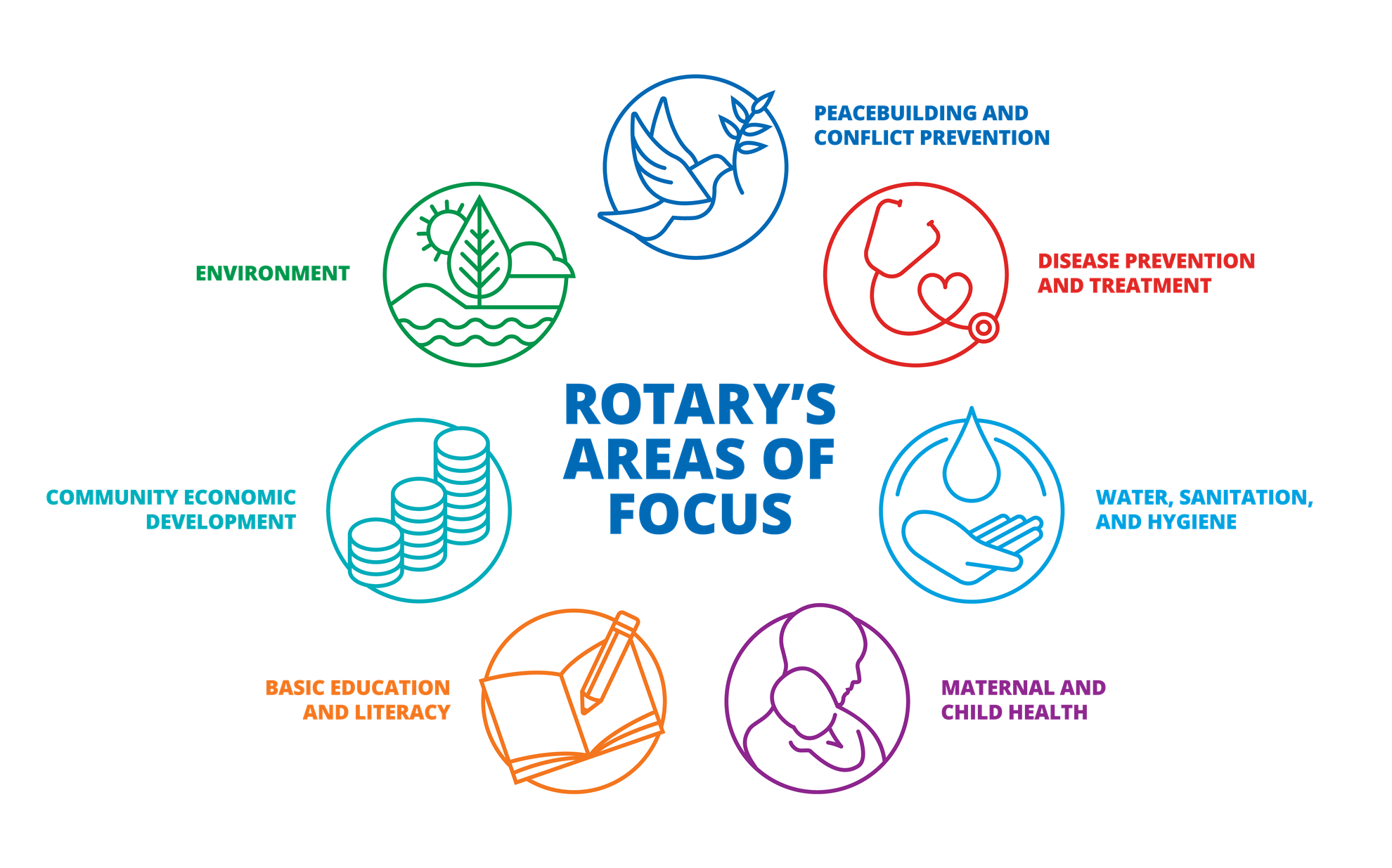
Today, Rotary is a worldwide network of more than 1.4 million Rotary and Rotaract members in 46,000+ clubs. Members work locally and internationally in seven areas of focus.
One of Rotary’s most significant achievements is its leadership in the global effort to eradicate polio. Since launching its PolioPlus program in 1985, Rotary and its partners have helped reduce wild polio cases worldwide by more than 99.9%.

For more than 120 years, Rotary has brought together people from different professions, cultures, and countries around a simple idea: people working together can create lasting positive change—in their communities and throughout the world.